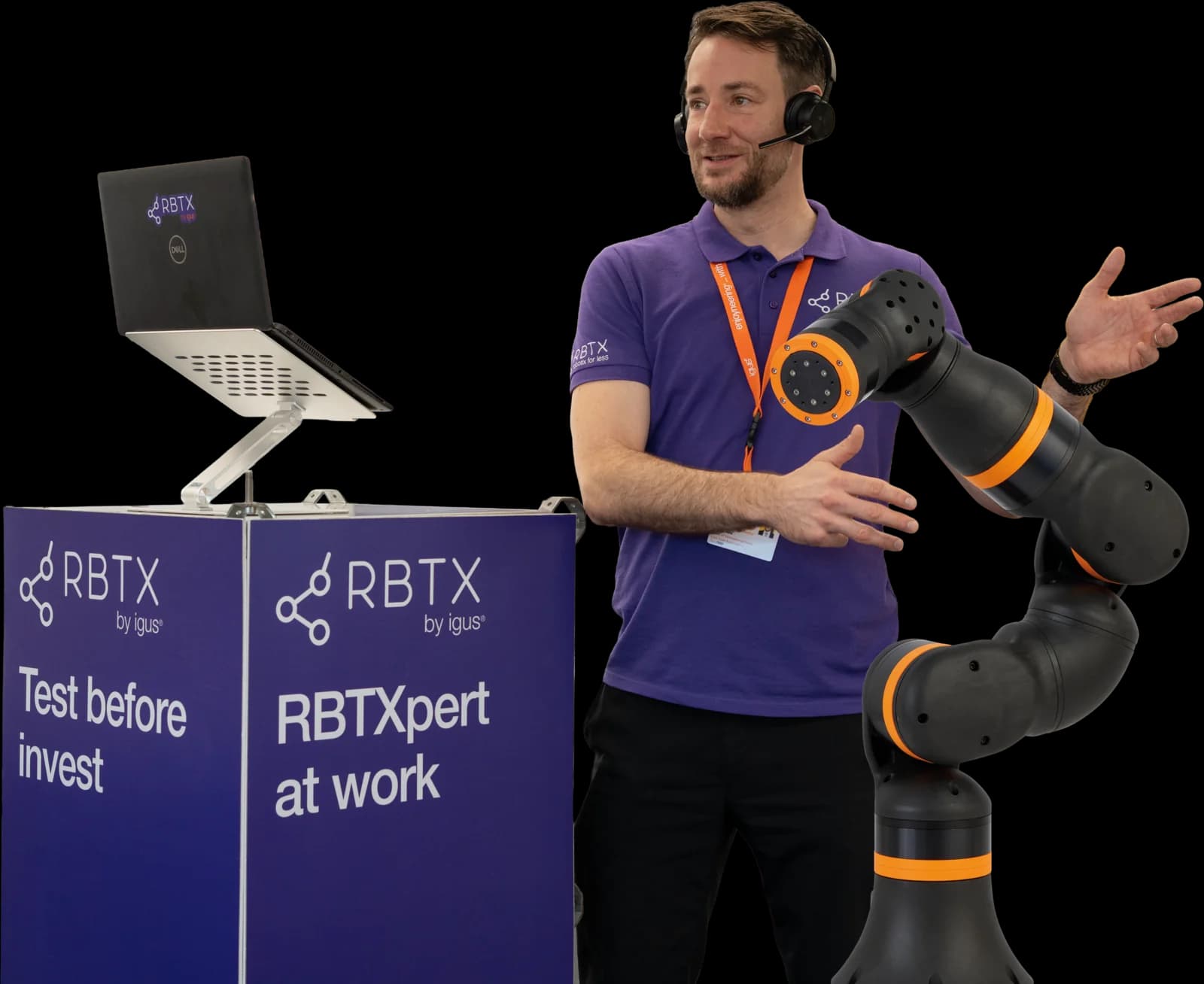
Capture attention.
Size, dynamic movements and targeted lighting are noticed from a distance. Align speed, lighting and subtle sounds with your product and the available stand area.
Turn your product into an experience. With interactive exhibits and robotics that make your message visible - from the first idea to integration.
Free consultation · For stand builders and companies
A rule of thumb in igus trade show construction: what does someone notice in the first three seconds while walking past? The best movement sparks interest and also shows what makes your product special.
Size, dynamic movements and targeted lighting are noticed from a distance. Align speed, lighting and subtle sounds with your product and the available stand area.
A single core feature is easier to grasp than an overloaded installation. Even long travel paths can be scaled down to stand size - with a compact, easy-to-follow model.
A touchscreen, a product selection or a personalised result gives visitors a reason to take a closer look at your application.
A fast travel movement turns the machine into an eye-catcher. The motion sequence puts the product on show at the centre.
Over 5 m/s on a short travel path: this example shows how dynamics can be staged even in a compact space.
Better to focus on one product.
Johannes Kurz · Head of In-house Automation at igus
His advice for your trade show idea: show one function in depth and make the benefit tangible in the right industry context.
From coffee at the push of a button to a clear process demo: discover different ways to engage your visitors.
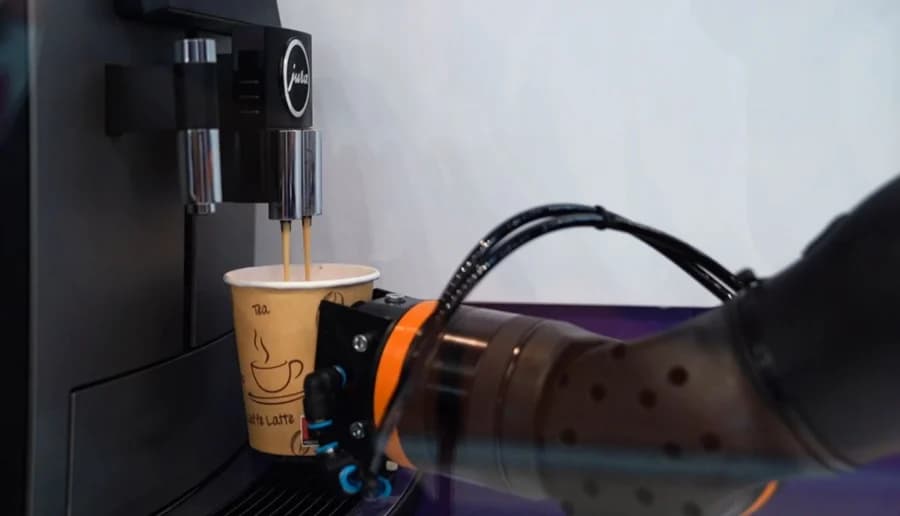 01 · Experience a service
The igus ReBeL works with a coffee machine via digital inputs and outputs. A familiar everyday situation makes robotics instantly understandable.
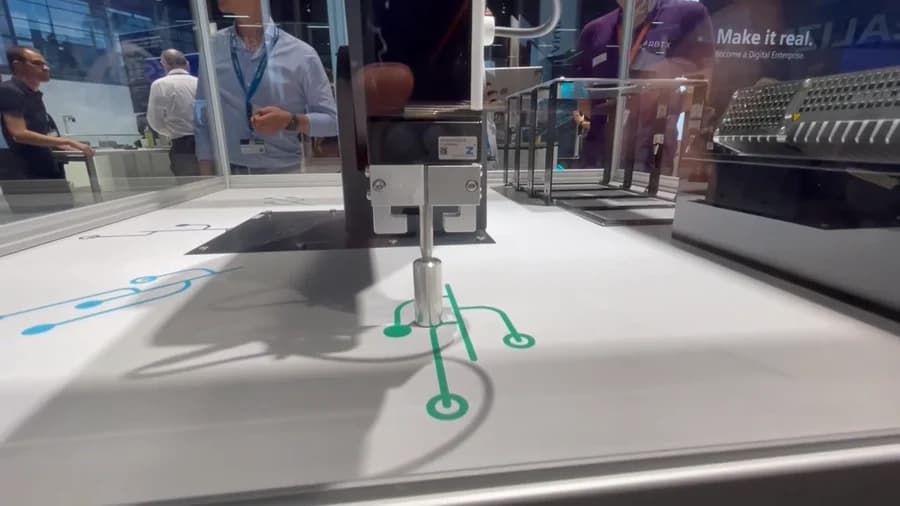 02 · Explain processes
A robot with an electric parallel gripper shows repetitive handling tasks inside a cell. Visitors can follow the process straight away.
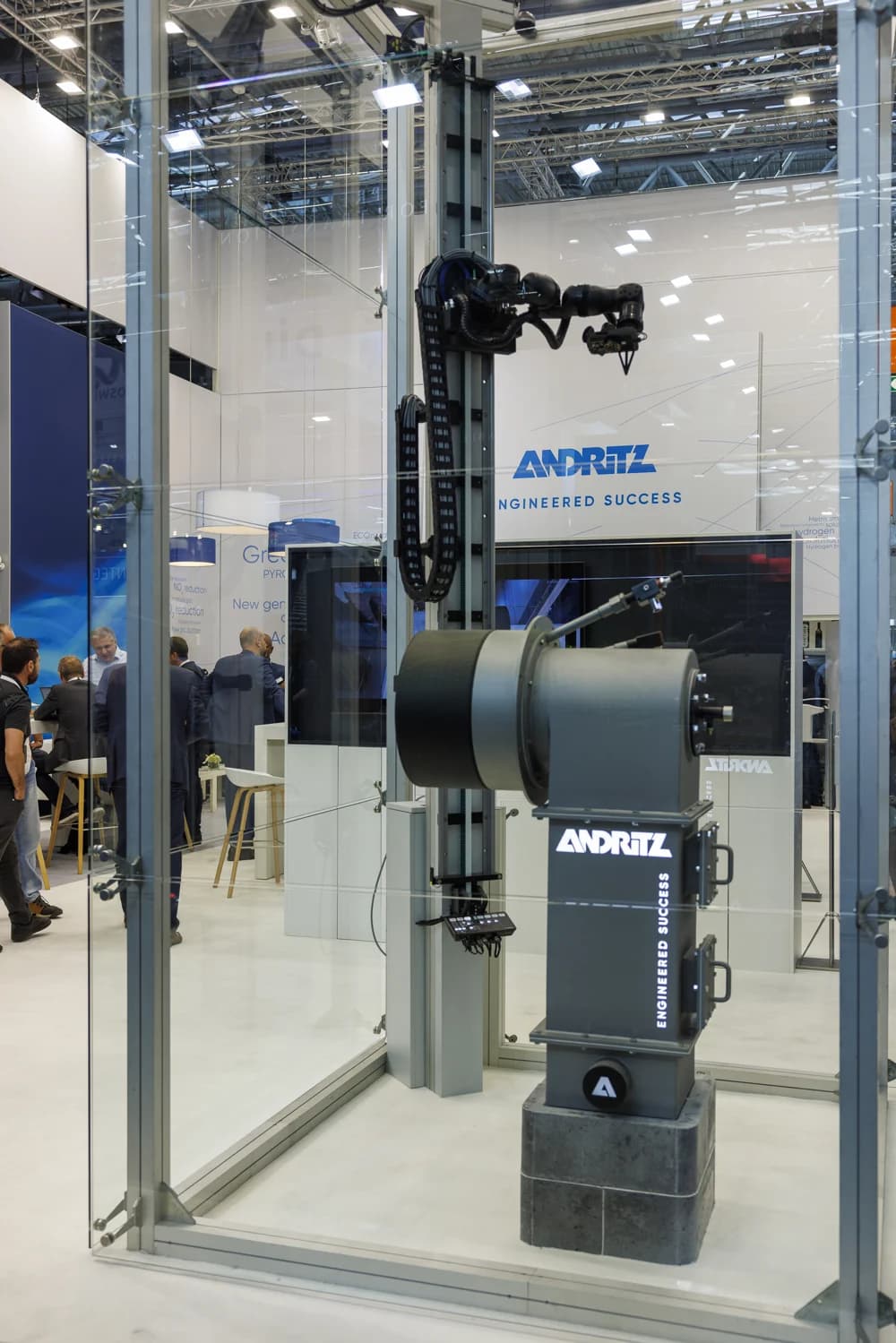 03 · Stage movement
Combining the ReBeL with a lifting column and a linear axis shows different positions and motion sequences in one shared demo setup.
The linked examples show specific setups and components. The scope of your exhibit is agreed individually.
Start with the goal of your presentation. The robot, the interaction and the right design follow from it.
Choose a focus.
Show the feature that convinces your target group. For medical and lab technology this could be a demo in cleanroom design, for metalworking a clear simulation around chips and machining.
Taking part instead of just watching. In the interview, Johannes Kurz prefers touchscreens to mouse and keyboard. His examples: having your own name written on a gingerbread biscuit, or choosing a sample and then touching it. A simple input becomes a personal contact with the product.
One show. Clear responsibilities. Light and sound are often controlled separately by the stand builder, the movement by the machine control. Coordinate interfaces and sequences early with stand builders, automation and media technicians.
A good trade show exhibit explains its function quickly and is easy to run day to day at the show. These decisions help.
Nested installations and many handovers make things harder to understand and increase the supervision effort.
One product, one clear sequence. Show the decisive function in depth. A recognisable simulation can be enough.
Food, chips or complex material changes can make cleaning, refilling and operation harder.
Use reality selectively. Use robust samples when the movement is the focus - for example a model cake instead of fresh food. Show the real process when the material or the machining result is what proves the benefit.
Exhibits developed in a rush can require constant supervision or complex PLC adjustments on site.
Test operation in advance. Plan test runs and a briefing. The stand team needs clear procedures for start, stop and faults.
"Plug & play" starts in the design phase. The goal: connect and start after transport, without time-consuming readjustment. A sturdy, modular setup and simple operation reduce the effort on the stand.
A sturdy frame protects the geometry when lifted by forklift. Secured or braked axes, protected grippers and defined transport positions help prevent shifting. Packaging, access points and connections belong in the concept.
Design the exhibit for the planned show day - around 8 to 12 hours of operation. Test runs before deployment and after its return help to spot weak points and prepare for the next show. Test duration and procedure depend on the application.
Insight from practice: Johannes Kurz describes an eight-hour test after the return, if the schedule allows before the next deployment.
Clear start and stop procedures, a briefing and understandable error messages make operation easier. Agree on what stand staff may handle themselves and when technical support is needed. The goal: a setup without daily programming work.
A service case with an Ethernet connection and a laptop with prepared software can make diagnosis and remote maintenance easier for stand builders. Local partners can also be planned in for on-site repairs. Network access, approvals, responsibilities and availability are agreed before the show.
At trade shows, robots meet an untrained audience and even groups of children. That is why we look at the complete exhibit: robot, gripper, workpiece, motion area and possible access.
Discuss a safety conceptRBTX supports you from selecting individual components to realisation with integration partners. Scope, budget and schedule are agreed together.
Which message, which audience, which show date? Add stand area, transport dimensions, desired interaction and your budget range.
We discuss sequences and components and refine the concept together. The effort estimate covers material, development and integration. Capacities and a possible realisation by external partners are clarified early.
With "Test before invest" agreed tasks can be tested in practice. Simulation and tests help find the right robotics before you invest in realisation.
Components, control and safety concept are aligned. Integration, test run, briefing and support are planned to match the agreed project scope.
Check your idea for feasibility early. Visit us in the Customer Test Area. We agree sample parts, test scope and the next step with you.
Request a testRobot arm, gripper, control and matching electronics for your own integration.
View the igus ReBeLUse the Machine Planner to configure ready-to-use robot solutions as a starting point.
Open the Machine PlannerFor a complete exhibit we coordinate the realisation with suitable partners in the RBTX network.
Request a complete solutionModular setups and interchangeable workpieces make reuse easier. Wraps or Forex panels adapt the exhibit to the industry - for example a cleanroom look for medical technology or machining samples for EMO. Plan transport, conversion and repeat tests from the start.
Plan new technologies in early: humanoid and mobile robots can make innovation tangible. What matters is a working demonstration, enough stand space and a suitable safety concept. Interactive design, integrated screens and coordinated lighting effects support the message. Every addition should help visitors understand your application better.
Discover humanoid applicationsAnswers on planning, operation and choosing your robot solution.
Another question? Let's talk.Show us what your visitors should experience. Together we clarify concept, feasibility and the right next step.
Discuss your trade show idea for free